Industrial Property Stamp Duty Singapore: SSD Holding-Period Impacts to Plan For
When people talk about “stamp duty” for industrial property in Singapore, they usually think about the upfront cost and move on quickly. For industrial investors, there is another part of the story that has a way of sneaking up later, right when you are already busy handling tenants, cashflow, and unit repairs.
That part is Space Nova 21 New Industrial Road Seller’s Stamp Duty (SSD) on disposal, and it is explicitly tied to holding period. Once you start planning an industrial purchase, the SSD calendar becomes part of your investment math, not just a tax detail.
This guide walks through what matters for industrial property stamp duty Singapore, with practical angles on holding period planning, B1 vs B2 industrial zoning implications, lease terms like freehold vs leasehold industrial Singapore realities, and the on-the-ground differences you will feel when you buy industrial property Singapore, especially for strata industrial units Singapore and ramp-up industrial units Singapore.
The stamp duty “shape” for industrial property: what to expect upfront versus on exit
Industrial property transactions in Singapore sit differently from residential ones in a few important ways. Based on IRAS guidance, industrial property is not subject to Additional Buyer’s Stamp Duty (ABSD). ABSD is discussed in the residential context, while industrial transactions follow normal BSD rules, and SSD is relevant on disposal when the holding period is short.
So the planning mindset becomes two-stage:
- Upfront acquisition cost planning (where normal BSD rules apply for industrial, and ABSD is not the industrial overlay).
- Exit planning, where SSD may apply based on how long you keep the property before selling.
If you are building a deal model, stage two is where the biggest “surprise risk” tends to show up, because it can change the outcome even when the rental story looks fine.
Seller’s Stamp Duty (SSD) holding period: the numbers that drive your exit timetable
For industrial property, IRAS applies SSD on disposal based on holding period. The SSD rates step down with time, and they go away after the holding period crosses a certain threshold.
Here is the SSD holding-period schedule for industrial property disposals:
- 15% if sold within 1 year
- 10% if sold within 1 to 2 years
- 5% if sold within 2 to 3 years
- None after 3 years
This is why industrial investment Singapore planning often feels like a logistics exercise. You might be fine operationally, but if you bought on a timeline that later forces a quick sale, SSD can quietly erode the returns you thought you were earning.
A practical way I have seen people handle this is by treating the first three years as a “stability zone” where you avoid treating the asset like a short-term trade. Even if your intention was always to hold for longer, unexpected constraints happen: tenant changes, unit fit-out problems, or financing adjustments. SSD turns those events into a cost you must account for if they force earlier disposal.
How SSD holding period interacts with rental reality and liquidity
SSD does not care how “good” your rental yield is if you sell too soon. Industrial property rental yield Singapore can be attractive in some cases, but industrial assets are still sensitive to more practical constraints than residential units, such as approved use, unit specifications, and lease tenure structures. The official planning logic for B1 use also implies that how you use the space matters, because B1 industrial property is intended for clean industry and certain industrial uses, with specific limits on what else can sit inside the development.
That is the background reason liquidity often feels more trade-specific. If a buyer’s business model does not match the approved use quantum and the unit’s physical specs, they may not be able to take the property off your hands quickly, which can delay an exit. In a slow exit scenario, SSD is no longer the threat, because you have naturally moved past the holding period window. In a forced exit scenario, SSD is precisely the threat, because the sale happens before the step-down thresholds.
So the SSD decision is not only “how long can I hold,” it is “how likely am I to be forced to sell earlier than planned.”
B1 vs B2 industrial zoning: why the approved use affects your downside risk
Many investors eventually ask the same question: if I buy industrial property Singapore, can I pivot the business use later?
The key detail is that zoning and use requirements constrain what the space is meant to support. For B1 industrial property Singapore, URA’s development control handbooks describe B1 as intended mainly for clean industry, light industry, warehouses, and uses like public utilities and telecom, with constraints based on nuisance buffers. The guidance also states that uses that need a nuisance buffer of more than 50m are generally not allowed, while some general industrial uses may be considered case by case if buffer requirements are met.
Even if the buyer’s current tenant fits, your ability to re-let or re-sell depends on whether the next use is acceptable.
More specifically for B1, URA states at least 60% of the floor area or GFA in a B1 development or strata unit must be used for industrial purposes. The remaining area is limited to ancillary or supporting uses and approved secondary uses.
This 60% rule matters in two ways for your planning:
- It can limit how much “non-core” activity you can run or market into the unit, which affects tenant mix.
- It affects who can realistically buy or lease the unit later, because buyers and tenants will also be thinking in terms of approved use compliance.
Now compare that to B2 industrial zoning. The verified context indicates that B2 is the heavier-industrial category, and B2 unit listings commonly reflect higher floor loading and different height specifications compared with B1 flatted factories. Even without going deeper into technical parameters, the direction is clear: B1 is generally lighter and more “clean industry” oriented, while B2 is positioned for heavier use potential.
For SSD planning, this zoning difference can matter because a unit that is more constrained in acceptable end uses may face slower resale liquidity if your tenant situation changes. Slow liquidity is not automatically bad, but it changes the probability that you end up selling under pressure, which is the moment SSD becomes real cost.
Strata industrial units Singapore: the “technical fit” that often determines your timeline
A large share of industrial buying and investing is done via strata industrial units Singapore. Strata units are convenient because you can buy a specific footprint, but they come with a practical requirement: the unit must match what your business actually needs, and it must match the approved use.
JTC’s guidance on checking industrial units highlights technical checks such as floor loading, ceiling height, goods-lift access, loading-bay provision, and whether the trade matches the approved use.
This is where experience beats spreadsheets. When a buyer calls to “clarify one more thing” after signing a tentative plan, it often turns out they have not fully aligned the unit’s physical specs with their workflow. Those mismatches can delay operations, and delays can turn into financing stress, and financing stress is the kind of pressure that can push you toward earlier disposal, which then reintroduces SSD risk.
To keep this tangible, here are the core strata industrial unit checks that can affect whether your holding period stays on track:
- Floor loading suitability
- Ceiling height adequacy
- Goods-lift access fit for your operations
- Loading-bay provision for loading and unloading needs
- Trade alignment with the approved use
If you are planning around SSD, you want the unit ready to operate without unnecessary friction, because every operational delay is a chance for your plans to drift into a shorter holding period.
Freehold vs leasehold industrial Singapore: tenure affects your exit planning horizon
Freehold industrial property Singapore is relatively scarce, and that scarcity shows up in actual supply patterns. The verified context notes that much new industrial supply is on leasehold land, and JTC estate and unit pages commonly show lease terms like 60-year, 30-year, or 20-year for industrial sites, depending on the estate and product.
So while “freehold vs leasehold industrial Singapore” is often discussed as a comfort factor, for SSD planning it is also a timeline issue. If you are buying a leasehold industrial asset, your investment story may be anchored to the lease duration. That changes how you think about when you might exit.
If your model already leans long, SSD becomes less of a threat because you are not tempted to sell quickly. If your model relies on a near-term exit, leasehold tenure can complicate buyer demand and exit timing, which again raises the risk that a sale happens before the SSD holding period window.
Buying under company name: how to think about risk without mixing residential rules
People also ask about buyinging industrial property under company name and whether it changes stamp duty outcomes.
The verified context states that IRAS stamp-duty rules treat entities differently mainly for residential ABSD purposes, while industrial SSD can still apply on disposal regardless of buyer profile. In other words, SSD is still fundamentally a holding-period cost for industrial disposals.
This is another reason SSD holding period planning stays universal. Even if your purchase vehicle is a company, your exit still triggers SSD based on how long you held the industrial property before sale.
GST on purchase: an additional upfront layer for non-residential transactions
Stamp duties are not the only “transaction taxes” that can affect your cashflow.
The verified context says that if you buy a new non-residential property from a GST-registered seller or developer, GST is payable on the purchase, and IRAS applies this requirement to buyers of non-residential properties when the seller is GST-registered.
This matters because GST and stamp-duty-related costs can influence how quickly a buyer needs the asset to start generating returns. If cashflow tightens, you can be pushed into decisions that affect disposal timing. SSD then becomes relevant again, because forced earlier disposal can happen under funding pressure.
Ramp-up factories versus flatted factories: why unit layout can change how fast you stabilize
Industrial assets are not just “square meters,” they are movement systems. The verified context notes that ramp-up factories provide direct vehicular access to units for loading and unloading, while flatted factories are generally accessed via common corridors, lifts and loading bays. Layout choice affects logistics efficiency, truck access, and fit-out flexibility.
In practical terms, a unit that supports smoother logistics is more likely to attract tenants who rely on frequent deliveries or bulky handling. It also reduces operational friction that can otherwise lead to turnover or short leasing cycles.
Since SSD is about holding period, tenant stability indirectly becomes part of SSD risk management. If better logistics helps keep your tenancy steady, your exit naturally stays aligned with your intended holding horizon.
City-fringe industrial property Singapore: why location is tied to tenant matching and business types
Investors often gravitate to city-fringe industrial precincts because they are close to workforce catchments and transport links. The verified context specifically lists examples like Tai Seng, Paya Lebar, Ubi, Kallang and MacPherson and notes that these are often favoured for e-commerce, light manufacturing, R&D and urban logistics.
This matters for SSD planning because a city-fringe unit can sometimes stay liquid across different business cycles, as long as the unit’s zoning and use compliance still fits. If your unit is B1, the intended industrial uses and the “60% industrial floor area” requirement still apply, even if location improves tenant variety. The zoning constraints do not disappear just because the precinct is convenient.
So the best way to think about city-fringe is not as a guarantee of easy exits. It is as a potential advantage for tenant matching, which can support stable holding periods.
Financing reality: why industrial property loan Singapore terms can shape your tolerance for short-term risk
Industrial acquisitions often involve industrial property loan Singapore structures that are assessed differently from residential loans. The verified context notes that financing for property investment generally depends on lender assessment, and non-residential loans are typically under commercial terms rather than residential housing-loan rules.
When commercial terms are involved, stress can materialize faster if the deal does not perform as expected. This connects back to SSD: if cashflow strain forces you to sell earlier than planned, SSD becomes a direct cost.
The counterpoint is also true. If your lender is comfortable with the rental and the business plan, you can afford to let the asset mature, and you reduce the probability that you trigger an early exit that falls into the SSD windows.
A simple way to build an SSD-aware purchase plan (without pretending certainty)
There is no investor who can guarantee timing. Industrial leasing and tenant demand can change, and unit readiness can take longer than expected. The value of SSD-aware planning is not predicting the future perfectly, it is designing your decision-making so that the harshest outcomes are less likely.
Here is the mindset that tends to work in real deals:
- Treat the first three years as the period where exit timing is most sensitive to SSD.
- Avoid unit choices that create compliance or technical misalignment that could force you into reactive decisions.
- Match zoning expectations to what you can actually run, especially if you are in B1 territory, where URA requires at least 60% of floor area or GFA for industrial purposes in B1 developments or strata units.
- Keep an eye on lease tenure, because freehold vs leasehold industrial Singapore realities can influence liquidity and your natural exit horizon.
- Use conservative financing assumptions when commercial loan terms are involved, so you are not pushed into selling under pressure.
This is also why many investors approach buying industrial property Singapore like a chain. You do not just ask, “Can I rent it?” You ask, “Can I operate it in compliance, can I keep tenants stable enough to hold past the SSD windows, and can I exit when it still makes sense.”
Putting it together: B1 industrial purchase planning, SSD risk, and the exit you actually want
Let’s tie the threads together.
If you Space Nova JVA NIR are considering a B1 industrial property Singapore asset, you are buying into a specific use framework. URA’s B1 structure is meant mainly for clean and light industrial uses, with nuisance buffer considerations, and with a requirement that at least 60% of GFA in a B1 development or strata unit is for industrial purposes, while the rest is ancillary or approved secondary uses.
If you buy a strata industrial unit, you then check technical fit like floor loading, ceiling height, goods-lift access, loading-bay provision, and approved trade alignment. If the unit is a mismatch, operations can stall, and that can stress your holding period plans. Since SSD is steepest in the first year and steps down after, your early years become the risk zone if you end up needing to dispose sooner.
If you are comparing freehold industrial property Singapore to leasehold, remember that freehold industrial space is relatively scarce because much new industrial supply is leasehold, and lease terms commonly appear as 60-year, 30-year, or 20-year depending on estate and product. Tenure shape your exit horizon, which affects your probability of falling into SSD windows.
If you consider buying under company name, the industrial SSD holding-period principle still applies on disposal. ABSD is not the industrial overlay, and SSD is not avoided by changing your buyer profile.
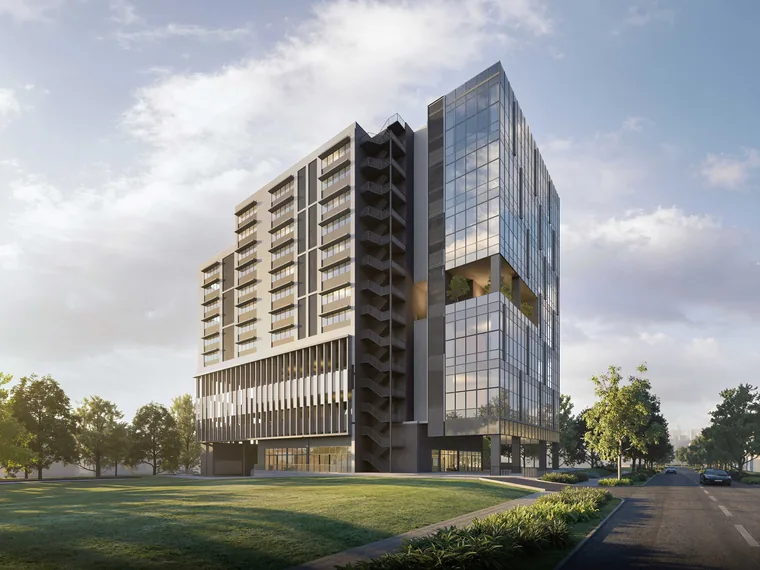
Finally, if you buy a new non-residential property from a GST-registered seller or developer, you must plan for GST on purchase. Cashflow impacts how long you can safely hold without forcing decisions.
The common thread is that industrial property stamp duty Singapore is not just a fee you pay on acquisition. For industrial investors, SSD timing is a core element of the exit plan, and it is tightly connected to zoning compliance, unit specs, tenant stability, and financing stress tolerance.
Quick practical guidance for buyers focusing on SSD holding-period outcomes
If you are shopping right now, you can reduce SSD-driven regret by narrowing the purchase to what you can hold comfortably, not what you can just “buy.”
Look for the unit that fits your approved trade use and technical requirements, especially for strata industrial units Singapore, where the operational reality can be unforgiving. If you are focused on B1 vs B2 industrial zoning, understand that B1 is positioned for clean and light uses with a required industrial use quantum, while B2 reflects heavier industrial potential with different specs like floor loading and height in listings.
Then build your holding period plan as if SSD is real and unavoidable unless you cross the threshold. Because even if you never intend to sell in the first year, life has a way of introducing delays, tenant churn, and financing surprises. SSD is the part that converts those disruptions into an immediate cost at the wrong moment.
That is the planning advantage: when you treat holding period as part of the product, not just the tax notice you skim later, your industrial investment Singapore decisions become calmer and more defensible.